Showing posts with label college. Show all posts

30.5.14

She's Honest But She's Crazy: using MC Lars to examine Ophelia and Drusilla

About a month ago, I went through a phase where I constantly returned to MC Lars’s “Hey There Ophelia” on my iPod. I listened to other songs out of principle, but I was weirdly drawn back to that same track, over and over, on the way to school, on the way home, while coasting down various streets in my neighborhood on my fucking magnificent inline skates. Even when my earbuds weren’t in, a ghost of it would waft in and out of the back of my mind. Then one day in class I was going about my normal business: doodle doodle doodle brood brood brood angst angst angst…and, “HEY! I TOTALLY KNOW SOMEBODY ELSE WHO’S HONEST BUT SHE’S CRAZY!!!”*

Of course, I’m by far not the first to make the connection between Hamlet’s Ophelia and Buffy the Vampire Slayer’s Drusillathis person even called her “our punk Ophelia”. But how many people used “Hey There Ophelia” as a template to break down the similarities? I dunno. If no one has already, I’m sure someone’s doing it right now as I press “publish” on this post. But here I am writing about it anyway, because I have the Blogging Stick.

Before I start, a few words regarding method: every time I quote a lyric from “Hey There Ophelia”, it’ll be bold and in all-caps. Also, excerpts from the lyrics don’t show up in this post in the same order they do in the song. I thought it made less sense to do it that way. So I didn’t (it’s good to have the Blogging Stick). And maybe I should add a spoiler alert.

OPHELIA BURSTS IN THROWING COLUMBINES AND DAISIES

This is one of the more obvious, or at least simple, ones. When TV Tropes lists Drusilla as an “Ophelia” archetype, they cite the line, “Do you like daisies? Hmm? I plant them, but they always die. Everything I put in the ground withers and dies.” Although we do see her flip out over an arrangement of roses before her birthday party, Drusilla isn’t really one for throwing around flowers. But when Ophelia throws flowers, she’s also saying all kinds of seemingly disjointed things with a sort of deranged whimsy. This is something Drusilla does all the time.

SINGING SONGS ABOUT VIRGINITY GONE

Before we talk about Drusilla’s “virginity gone”, let’s touch on some Ophelia scenes that occurred before the parts in the play where she was throwing around flowers, or getting dragged out of the Guggenheim kicking and screaming.** The men in Ophelia’s life – her father Polonius and her brother Laertes – have taken a keen interest in Ophelia’s love life. At this point in her life, it might be the most significant part, seeing as the play was written at a time where women had to get creative if they wanted the gamut of their options to extend farther than marriage-and-babies and nunneries.

The interest Laertes and Polonius have taken in Ophelia’s love life, specifically the part that involved Prince Hamlet (with whom Ophelia had a history with outside of the scope of the play), comes with a bit of micro-managing. The micro-managing ranges from unsolicited advice to staging convoluted plans involving hiding behind tapestries; zealously trying to exert influence like they were Lizzy Bennet’s mom or something… whose name is slipping my mind, possibly because Pride And Prejudice having a place on a survey class’s syllabus doesn’t mean I won’t doodle doodle angst angst right past it.

At one point, Drusilla, too, had a man zealously interested in significant (meaning, all) parts of her life (it’s worth mentioning that there was no history between him and Drusilla like there was Hamlet and Ophelia when the interest was taken). Only this interest was less like Lizzy Bennet’s mom and more like a deranged serial killer. Then again, maybe I missed something while I was doodle-angsting and Lizzy Bennet’s mom really WAS a serial killer. Anyway, the prolifically murderous vampire Angelus made a point to exert influence over Drusilla’s life when he decided to make her his “masterpiece” by means of tormenting her into insanity before siring her into the ranks of the undead.

btw – I KILLED MY GIRLFRIEND’S DAD, HE WAS SPYING NOW HE’S DEAD – one of Angelus’s methods of making mincemeat out of Drusilla’s mental health was killing off her entire family. The chief difference here being intention: Angelus killed Drusilla’s father and everyone else on purpose. For Hamlet, who thought he was about to stab Cladius and not Polonius, it was a total accident. I mean, sometimes you get mistaken for someone you’re not when you cultivate a propensity for hiding behind tapestries.

While we’re at it, Hamlet tells Ophelia to GET THEE TO A NUNNERY because, basically, he was being a dick. No one told Drusilla, “Get thee to a nunnery.” Before Angelus even came on the scene, Drusilla wanted to live a religious life. After driving her insane, Angelus waited until Drusilla went to a nunnery on her own volition. On the day she took her holy orders, Angelus busted in and finished off his “masterpiece” by making her into a vampire.

An important defining moment of Drusilla’s life was a man’s doing. It was an action less subtle and way the fuck more malicious than Polonius trying to be Lizzy Bennett’s mom, and Angelus did have a female accomplice for parts of it… but it was Angelus’s obsession, Angelus’s dirty work, Angelus’s “masterpiece” that made an indelible mark on Drusilla. Mind you, I don’t think we can officially make Ophelia’s death anyone’s fault either. There’s nothing in the way of interpreting that demise as not self-inflicted. She could have just misjudged the weight of a branch while climbing the tree. There are lots of reasons for climbing trees that have no suicidal intent attached to them. Tree climbing is fun.

I’VE GOT NOTHING TO DO BUT HANG AROUND AND GET SCREWED UP ON YOU

The gender dynamic in BtVS is fundamentally different than men, strong; women, helpless. And the gender dynamic is probably complicated in Hamlet if you squint at the text long enough and/or do an extensive search for literary analysis that makes such claims. Or just spend more time thinking about Shakespeare than I do. Nevertheless a popular interpretation of mental health in Hamlet is that Hamlet’s more contemplative, question-probing mode of mental-disturbance next to Ophelia’s nonsensical daisy-throwing is a statement of men being more rational creatures to begin with, and women being overly sentimental slaves to their emotion. More than that: the root of mental health problems in women, more often than not, is because their sexuality has wormed into their brain and corroded whatever sanity was there in the first place.

Angelus’s damage on Drusilla was already done when she met and sired a man who would come to be known as “Spike”. They proceeded with a VERY FUCKING LONG long-term romantic/sexual relationship*** (longer than Hamlet and Ophelia’s entire lifespans), and a relationship, in which, Drusilla is hardly a lovesick tool (not necessarily trying to say Ophelia’s a lovesick tool either).

Drusilla and Spike definitely loved each other, and, frankly, despite all the fuck-uppedness that comes with being undead super villains, their relationship was probably healthier than Hamlet and Ophelia’s. But when Drusilla saw that it wasn’t working anymore, she did break it off. Spike was becoming preoccupied with the Slayer and Drusilla could see that this would only grow overtime (oh, right, did I mention that Drusilla can see the future?). Despite her trademark insanity, Drusilla was calm and rational about it, judging by the flashback of the breakup. While we aren’t shown how Drusilla spent her post-breakup days, I’m pretty sure she didn’t drunk-drive back to Sunnydale and blubber hopelessly on the shoulders of her archenemies.

click for source

MY GIRLFRIEND TOOK HER LIFE, AND I’M LIKE “GOODNESS GRACIOUS”

Suppose we put aside all open contemplation of reasons why (overcome with grief for her dead father/pre-existing unfortunate brain chemistry/fell in love with a dick/tree-climbing hobby gone wrong) Ophelia died and make the assumption that she really did kill herself. Ophelia would be different in that way because Drusilla never says “die”. When still a human and Angelus was systematically pulling the fingers off her grip on reality, he had to work to track her down at that nunnery. Drusilla never laid down and was like, “Fuck it, this is hard, just make me a vampire or kill me, I’m done.” Likewise, after she became a vampire, she didn’t attempt suicide – something we know vampires are capable of. Angel (formerly known as Angelus) almost tried it, as did Spike. And Edward, come to think of it.

Yes. I said Edward. Deal with it.

Therefore, gentle readers, Drusilla and Ophelia are similar, but not interchangeable. The reasons for this are numerous, including but not exclusive to Ophelia not being a vampire and Drusilla refraining from staking herself on the flimsiest branch of a willow tree, let alone stake herself on a branch in Denmark circa the sucky “rights” of women.


* Spike tells Anya sometime in season 5: “Drusilla was always straightforward. Never knowing a single buggerin’ clue about what was going on in front of her, but she was straight about it!”

** In a 2000 film of Hamlet, Julia Stiles plays an Ophelia with cool nail polish who burns Polaroids, and, as previously mentioned, has a fit in the Guggenheim Museum. Speaking of modern depictions of Ophelia, if, when you listened to the MC Lars song, you were like, “wtf is ‘Soft Cell’?”, here’s some context (I wtfed too):


*** Made possible by being around for a VERY FUCKING LONG time. Neither were born or sired in Shakespeare’s day, but it was a century and some change before they arrived in Sunnydale to grace the town with their various evil exploits. Attempted apocalypses and whatnot, ya know, vampire stuff.

7.5.14

If a Tree Falls in the Forest and Doesn't Read Chaucer, is it Still a Writer?

It’s a week ago and I’m sitting on lukewarm linoleum floor in a basement because on Tuesdays and Thursdays all of my classes are in windowless rooms. (One might think this would diminish the distraction level, but, no cigar.) It might also be worth mentioning that in this floor-sitting scenario, I’m in the hall outside the classroom where my survey class takes place, not sitting on the floor during my survey class playing with toy trucks. I’m waiting for the big rotation; the chronoctical* framework of time allotments; the clockwork on which the university I attend is wound. Sentence fragment sentence fragment. Jazzhands.

Do I still have your attention?

Thank you for your patience.

I’m sitting there on the floor under a bell jar of caffeine withdrawal and poor air circulation, “taking notes” (re: disassociating in the margins with a pencil) on something John Stuart Mil wrote when someone asks me if I’m an English major. Because, surprise: someone else sat down in the general vicinity of my occupied floor space since I got there. Whodathunk.

I answer this surprise dude, “Yeah.” Then the needle sets down on the slowly rotating LP of my Better Grasp Of Consciousness and I add, “…do people who aren’t English majors take survey classes?”

“I’m not an English major,” Surprise Dude says. “When he [the professor] asked if there were any interdisciplinary people in the class, I was the only one who raised their hand. You didn’t, but it didn’t look like you were engaged, so I figured I’d ask.”

Well, yeah. I mean, I’m a turntable in a woman’s body. I have no central nervous system. It helps if I’m sitting next to an electrical socket.

Not the point.

Surprise Dude is a Classics major. He’s not only taking our lit survey of the 18th and 19th centuries, but also for the prior era. “I also plan to take the one after this one,” he says. “Because I want to be a writer, so I’m going to have to know it someday.”

Which prompts a flashback to Mr. Yale, my lower division survey professor. Not as often as he’d regale his class with proud anecdotes from his undergrad years at Yale, but often enough he would repeat to the class what he tells all students who come to his office hours saying they want to be a writer. It went like this:

If you want to be a writer, you MUST read Chaucer, you MUST read Spenser, you MUST read Milton, you MUST…

At which point the needle would lift from the LP of my Better Grasp of Consciousness and be swapped out for a recorded live reading of, like, Rilke? I don’t know. Honestly, it totally probably wouldn’t be a live reading of anything. It would probably be Arrivals and Departures or Static Age. For mentioning those two albums in the same sentence, an elitist punk snob somewhere is choking on their own vomit, but that’s their problem.

Because, Surprise Dude and Mr. Yale, if you want to be a writer, IMHO, there is no required reading list. You don’t have to slog through every last one of The Canterbury Tales or recite Wordsworth or be able to tell someone at the drop of a fedora the difference between a Petrarchan sonnet and a whatever-that-other-kind-of-sonnet is called. Not if you don’t want to.

And if when you say “I want to be a writer” you actually mean “I want to be a published writer”, I get that there’s some required reading there for business purposes. I have self-published friends who have to market their own books and I’ve written a handful of queries myself: I know you have to be able to compare your writing to what’s out there to give people a feeling of where in the galaxy of genres your stuff floats.

I get all that.

I’m just saying: by virtue of writing, like, a sentence (maybe even less), you’re a writer.

Mind you, I said nothing of the kind to Surprise Dude. There was no intelligent discourse on the matter. I kind of glazed over and murmured something about how too much disengagement is like cigarettes because it will give you emphysema of the soul. Then we stopped talking.

The following day, I had a vaguely similar conversation with one of my few neighbors who isn’t a fundamentalist about whether or not you can compensate for the perceived mopedishness of inline skates with a Misfits shirt (spoiler alert: by that logic, you can’t; not just because they sell them at Forever 21) (additional spoiler alert: it’s far easier to not give even the smallest modicum of a flying fuck). But I’m not going to regurgitate that here, because at some point I’m really just entertaining myself and I’d like to maintain some semblance of artistic integrity. That’s what it’s called right? The thing I’m trying to say?

Agree? Disagree? Do you have a required reading list? Did someone named Artistic Integrity punch you in the face when you were a kid?


*This is a word. I’m not even joking. I’m not telling the truth either. But I’m not telling it with a straight face. That’s what counts.

2.5.14

Stephanie the Blogging Stick Stealer

I have a problem. Due to a bureaucratic error with our birth certificates, my problem has the same first name as me. But for the purposes of (1) avoiding confusion, as well as (2) reclaiming my tiny corner of cyberspace, we’re going to call her middle name, Stephanie.

Stephanie, my pyro-klepto evil twin sister has boundary issues. This has never been a mystery to me. When we were kids, she was always stealing my Buffy action figures. On top of that, she hasn’t really been the same since her girlfriend left her right after she became a novice at the convent at Lilith Cathedral. What little I overheard from their closing fight went something like this:

“Beb, we can work something out…”

“YOU’RE GOING TO TAKE A VOW OF CHASTITY DUMB ASS.”

Poor girl.

And when I say “poor girl” I do not mean Stephanie.

Because this time Stephanie went too far…

Stephanie stole the my Blogging Stick.

But before I go into that, allow me tell you something else about Stephanie. We may share the same face and first name, but we are not the same person. Perhaps one of the strongest points I can use to illustrate this is in how Stephanie became a distance professor. As a supporter and defender of the Constitution of the United States and the Constitution of the State of California, I wouldn’t try to burn down a library. I just wouldn’t. It feels a little too Fahrenheit 451-ish for someone who’s supposed to be a champion for the First Amendment.

That’s right: Stephanie tried to burn down the library at Saint Thecla’s University. Could we say that it’s ironic that a Buffy Studies professor would try to set ablaze to an academic institution, what with the (SPOILER ALERT) razing of the school gym at the end of the Buffy movie and (ANOTHER SPOILER ALERT) the destruction of the high school at the close of season three? No. If we were to use the term “ironic” accurately, we really couldn’t. It would be more accurate to declare the irony that lies in the faculty’s passive-aggressive decision to tell her she could stay on staff so long as she stayed Very Far Away from the campus. They may have put this forth to get rid of her, but they also put it forth without taking into account the phenomenon of online learning. Thus, my sister still teaches for them via the ultra-modern loopholes the Internet provides. All because no one had the balls to outright tell her, “You’re fired, Stephanie.”

Now she’s in Mount Shasta.

Hijacking my blog.

That bitch.

Hence, some of the things I’ve been writing recently have not been written by me. Getting crossfaded and promiscuous as a means of lassoing people into the faith? That’s all her. I am the paradigm of nice, mainstream-Protestant values, thank you very much. Alienating any possible Unwashed Hippies from the general blog audience? Well, that’s not the me either. Because I have tact. The logic that numerous consecutive Hot Toddys are the only thing that’s better than one Hot Toddy? Do I LOOK like an alcoholic to you? (Please don’t answer that.)

Like I said, the things she writes are not things I write. If one day you type this URL into your web-browser and the name of the blog has been changed to “LOUD SEX AT THE NUNNERY”, you know that my evil twin is at it again. If you read something here along the lines of,

“Seeing how many times I can make a military recruiter repeat themselves is definitely on the list of my favorite pastimes.”

or

“I don’t always back up into park vehicles, but when I do, I drive away quickly.”

that’s not me. That’s Stephanie. Unless it’s nothing you find offensive and/or prompts you to sit me down at your kitchen table for an intervention because you’re worried about the state of my soul*, then it is I to whom all credit is due. Especially if you find it wildly clever to boot – those parts are all me.

Now that I have unwittingly retrieved the Blogging Stick, more substantial and less unabashedly self-referential writing will balance out the errors of my sister. Pinkie Swear.

Also, Stephanie, if you’re reading this: I found the blueprints you and Chloe drew up – the ones for the metal super-soaker with which to spray innocent passersby with scalding hot liquids, yes? You’re not getting them back until you give me back my Buffy the Vampire Slayer inflatable chair. Just sayin.


* Because I’m sure you have the time to do this and no life of your own to worry about instead…?

29.4.14

Saying ABSOLUTELY NOTHING In Particular About Responsible Triviality and Gif Abuse

I have not run the gamut everything I could be doing except my linguistics paper in the past 24 hours...

…and when I say “linguistics paper”, I mean grading papers. Because I’m a professor.


Anyway, the reason why I can’t say I’ve done everything EXCEPT grade papers in the past 24 hours is because that would defy the Laws of Procrastination. While suspended in academic inertia, I tend to maintain the personal delusion that I will start grading papers sometime in, like, the next five minutes. Therefore, it’s unrealistic and irresponsible to consciously commit to something as time-consuming as a full-length feature film or picking up where I left off in The Chelsea Whistle. Which is too bad. I mean, if I were honest with myself about my unspoken commitment to dwindle the rest of my waking hours on pointless non-activities, I could at least drink. Because, let’s face it, folks: the only thing better than a Hot Toddy is numerous, consecutive Hot Toddys.


According to the warped logic of the Laws of Procrastination, intensely trivial activities are The Responsible Thing To Do. Because if the Paper-Grading’s gonna go down in, like, five minutes, anything that I’m going to do that’s not grading papers better be quick. For example, Tweets are written. Not only is Tweeting a relatively small exercise, there’s an additional delusion that everything I accomplish in the perpetual five minutes before I start in on my less palatable responsibilities drips with importance. Anyone who follows me on Twitter must want to know about it. Why wouldn’t they? (See also: the existence of this blogpost.)


After a smattering of Tweets, I might get up and make rice pudding – because, all things considered, making rice pudding doesn’t take all that long, does it? While ladling out the finished product, it will occur to me that vegetarian chili fries would be THE BEST THING EVER; second only to the post-chili-fry GENIUS that is cookie-baking. These, of course, take more time than a full-length feature film, but…in the grander scheme of things...

BEST FUCKING IDEA EVER

I will admit that the endless five minutes are further perpetuated by all the dishes dirtied by these GENIUS culinary shenanigans, and it would be sorely irresponsible of me if I left them all festering at the side of the sink.

Then, with dishpan hands and keystrokes, it will suddenly seem to be very important that I try my hand at being one of Those People who overload their blogposts with gifs. I already dabbled in ending posts with music videos, how different is that from the novel gimmick of gifs? I mean, really. What’s the worst that could happen?

You know who didn’t ask herself that latter question very often? High School Me. A very short-sighted, small-picture woman, High School Me was. Once, in causal conversation with someone she hardly ever spoke to at school, it was brought to light that the near-stranger had read her Live Journal on a more-than-once basis. Which was like…what?


High School Me wasn’t expecting that.

A bit of a wake-up call.

Let that be a lesson to you: if you wish to blunder forth according to your most cherished misconceptions, best to not talk to anyone lest said misconceptions are challenged. Likewise, if heavily drinking on a daily basis continually fails to be compatible with your rudimentary Protestant morality: give up church for Lent. But only for Lent – assuming that you’re in any way attached to the prospect of pastors being your bridesmaids.

And High School Me was operating ten years ago. I’m sure it’s gotten “worse” since then…because the world’s on a trajectory towards ultimate shittiness…right? That’s how that story went? I don’t know. There’s a draft of a text message saved in my phone that reads, “The world through my urethra (rev 2)”. I’m torn about that, too – whether or not I want to remember its context.

Anyway: these days, I’m not terribly worried about being surprised about who reads my Live Journal. For one, I no longer have a Live Journal. For two, I’ve seen the numbers (as far as page-views on this blog goes), and nine times out of ten, I’m near-exclusively writing or Chloe, Sophia, and the Time Machine Mechanic. Sometimes Anita, too.

Mind you, I’m not complaining about the limited readership. It makes me feel like I have more license to spontaneously revert the purposes of posts to platonic love letters without it being too weird or alienating.

I love you guys.


BTW, I stole all the gifs from here. They stole them from somewhere else.

29.3.14

How to b.s. a church history paper, part 3


They Had Risen Indeed: Christian Pluralism, Cigarettes, and Donuts in the Roman Empire

THROUGHOUT THE MISTS OF TIME, people have bickered over which soteriology is the most salvific. The doctrinal anarchy of the π th century was no exception. From Jerusalem to Byzantium and back, the metallic crashes of clashing gastronomical theologies and their aromatic diversity filled the air. In the east, a smattering of fermented laypeople had theurgical epiphanies that inspired Docetic donuts. Meticulous ecumenical calculations in the west gave us the Kabbalah kabob, partially inspired by widespread Platonic pizza of centuries of yore. Meanwhile, renowned heresiologist Zarathustra-Tertullian IV’s self-proclaimed orthopraxy in cake-baking brought him to conclude that he was qualified to wield the Orthodox Stick with his attacks on rival Christologies. This paper will not concentrate on Docetic donuts or Kabbalah kabobs, but the objects of Zathustra-Tertullian’s (hereunto, ZT) most well-known theological foes, the Baguette Brothers of Pelagnism and Semi-Pelganism, and Quasimodo of the Quasi-Biblical Non Sequiturs.


Quasimodo of the Quasi-Biblical Non Sequiturs was originally known as Jerome Bacon. Jerome Bacon grew up in a boarding school that focused on producing informed hermenuticists. The story of how Jerome Bacon became the figure ZT would later flagellate with the Orthodoxy Stick is one of mildly-gritty, but not obnoxiously gritty, coming-of-age-ness. Like many who feel stifled by desk-ridden academia, Jerome Bacon became very bored and annoyed with his lot in life. Eventually, instead of spending his nights knee-deep in his prescribed studies, Jerome ended up chilling at a gay bar, where he would end up having the revelation that transformed him into Quasimodo of the Quasi-Biblical Non Sequiturs.


The gay bar happened to be the very close neighbor of ZT’s monastery. Scholars throughout the centuries have suggested that it is this and not the far-fetched claims of Quasimodo’s Gnostic gluten-occultism, is the real reason that fired up ZT to write lengthy exegesis against Quasimodo’s work and proposed edicts that were strategic in outlawing certain Quasimodo’s doctrines. ZT had nothing against gay bars, per se, but this gay bar had an unusually large demographic of chain-smoking clientele. ZT’s window was the closest in the monastery to the gay bar itself, thus he was most privy to the pervading miasma of second-hand smoke. Can ya blame the guy for having a chip on his shoulder? ZT had a bad case of asthma. Just sayin.


Aaaanyhizzle, the work that ZT would later condemn as anti-canonical apocrypha (and Quasi-Biblical Non Sequiturs) was a sort-of beatnik take on various wisdom literature: terse proverb-like non-proverb stuff and Ecclesiastes-esque musings against petite-bourgeois consumerism. One of Quasimodo’s works held up Courtney Love’s “Doll Parts” as a perfect example of the disillusioning effect of objectification via capitalism. This made Quasimodo a prophet since both capitalism as we know it and Courtney Love were things of the very-far-off future. Which might also be why it was such a strong point of contention with ZT: although such anachronistic pop culture references were a part of Quasimodo’s spiritual reality, they were not included in ZT’s.


ZT also raised gender issues in his criticisms of the plausibility of the vision that would turn then-Jerome-Bacon into the Quasimodo of Quasi-Biblical Non Sequiturs. The vision then-Jerome-Bacon had was of a female figure named Christine who bought American Spirits by the carton – something else that ZT would dissect as a non-God characteristic, because, surely, if who ZT presumed was Jesus in Quasimodo’s text was really Jesus and Jesus was really smoking American Spirits, he would not buy them, but conjure them, collecting sticks, syringes, and other debris and supernaturally transforming them from the previous matter into smoke-able products. (Was that a run-on sentence? Guess who doesn’t care.) The conjuring would make strong associations with the water-to-wine miracles of the Gospels, and therefore making the Jesus-ness of the character more plausible. ZT also had a bone to pick with the kind of American Spirits “Jesus” was smoking: “If Jesus was a smoker at all,” ZT wrote, “he would not smoke menthols. That’s the rule I made up just now.” You may be wondering why ZT keeps referring to Christine as “Jesus”. This is where the gender issues that I mentioned in the topic sentence of this paragraph come in. Took me long enough, right? ZT was so in denial about the possibility of a woman-deity-figure existing in the Judeo-Christian consciousness, even in the case of someone he deemed a heretic, that he assumed “Christine” was a typo where “Christ” was originally intended. Therefore, ZT concluded, this apparent “Christine” was definitely “Jesus”. Even in the utterly impossible event that this supernatural femaleness could occur, ZT figured, it would not happen in a gay bar, as clearly male homosexuals were woman-haters by nature. This is insanely ignorant. But it’s not my opinion, it’s ZT’s. I’m just quoting him.


Quasimodo detailed to the hagiographers at E-News the first appearance of the chain-smoking, gay-bar-dwelling Christine: “Thus, she approached and said unto me, ‘Jerome Bacon, you will now be Quasimodo.’ And I was like, ‘Why Quasimodo, LORD?’ And she was like, ‘b/c I think the name is cute, and someone will someday call the things you write ‘Quasi-Biblical Non Sequiturs’. I like alliteration. Furthermore, I need you to up and bail from this place in the time of 30-50 days and make a one-way pilgrimage to Notre Dame, where you will neither eat nor sex, but pen the musings of your heart during the time in which you are not ringing the bells.’ To which I said, ‘What’s this Nortre Dame place, and how do I know they will accept me as a bell-ringer?’ ‘Chillax, bro,’ the LORD said unto me, ‘I got this covered.’ Christine then also said that I would know what to write because she would direct my heart what to say.”


Thus, after a period of 31 days, in which he organized his affairs and his friends threw him bon voyage parties, Quasimodo got on a Greyhound bus for Paris. Our faithful and possibly-hallucinating pilgrim applied for the position of bell-toller at Notre Dame cathedral. Despite fierce competition – it was a very nonsexually sexy job, you see – the monks and nuns awarded him the title. I know. I was one of them. Quasimodo moved into the bell-tower, an established votary, who took on an ascetic lifestyle. The monks supplied him with cartons of menthol American Spirits, and he smoked them as he adorned the bells with iconography of his gay bar Christine, with abstract embellishments of Pollock-like paint splatters. Christine would eventually appear to him again, saying, “Alright, Quasi, don’t get me wrong or anything, I mean, the icons are nice. But I asked you to write the musings of your heart.” Quasimodo replied, “I know, LORD, but…I’ve got writer’s block. And I don’t know how to write. I know I didn’t mention it at the gay bar, but I don’t think I’m up to putting my thoughts into words.” Christine told Quasimodo that he should trust her and that she would direct his heart to write such things. After the vision, Quasimodo put off the writing for 15 more days, fraught with anxiety and smoking more cigarettes than he was used to. He didn’t drink any water, either, so eventually the smoking, mixed with the heat-wave that hit Paris that winter, made him get a migraine and puke his guts out. Quasimodo started crying and cried, “Okay, I get it. I realize this migraine was punishment for my procrastination.” Christine showed up posthaste and was like, “Hey, dude. That was no punishment. Punishment is not how I roll. You’re dehydrated and smoking more stoges than even I smoke. But, here, before this vomit dries – I’m telling you now – take this stick and dip it in and I will tell you what to write.”Quasimodo took the glittery fairy-stick from Christine and said, “What wondrous stick is this, LORD?” And Christine was like, “I see what you’re trying to do – don’t change the subject just so you can put this off more. I’m right here. I’m going to help you write this.” Christine then dictated to Quasimodo what to write and Quasi wrote it. His migraine eventually lifted, and once Quasimodo got going, Christine didn’t have to DIRECTLY dictate to him anymore, and his faith increased manifold.


There, on the floor of the bell tower, Quasimodo transcribed what ZT would later call Quasi-Biblical Non Sequiturs – a title which he meant to be derogatory, but Quasimodo’s followers adopted it lovingly, much like how “beatnik” and “Christian” were supposed to be derogatory terms and the actual beatniks and Christians made it their own. After he was finished, Quasimodo fell asleep in the corner. The monks arrived with Quasimodo’s menthol American Spirits, saw the dried up vomit, and were amazed. They ran down to their quarters to fetch their scrolls and inkwells, and ran back up the stairs to capture the vomit-writing in ink-writing, eventually waking up Quasimodo for some verification, since vomit-writing can be hard to read sometimes.


Quasimodo’s asceticism was yet another point of contention for ZT. Few movements of the day swore off food, seeing as the movements were mostly baked-good-based. ZT said that he would have found Quasimodo’s spiritual revelation more plausible if Jesus (Christine, really) prompted him to make and eat food instead of abstain from food altogether. ZT deemed Quasimodo’s anomalous asceticism unholy. Although ZT was essentially against Pelagnism and Semipelganism, he had some nice things to say about it, while he had no nice things to say about Quasimodo’s movement.


Pelagnism (seeded) and Semipelganism (unseeded) were conceived by JM and MM, also known as the Baguette Brothers. JM is short of Joesphus Meredith, this abbreviation causes him to be frequently confused with Justin Martyr in ecclesiastical scholarship, but, you can’t win ‘em all. MM is short for Meredith Meredith ,because, again, you can’t win ‘em all.


JM and MM came from a theological background of bizarre eschatology from an obscure cult of patristic nomads. Even the most radical on the outer-most fringe of Jewish Apocalyptists wouldn’t touch this theology. It was that weird. So very much so, that can’t begin to accurately describe it in this essay. So I won’t try. I mean, it’s a pretty long paper already. Despite being long-steeped in these creeds, JM and MM felt like they were out of their element, and broke off to establish a more conventional order in a suburban setting. This element of conventionality, however subtle, was why ZT managed to formulate a few, rare, nice things to say about their heresy. “At least,” ZT wrote, “JM and MM have managed to include a structured liturgy in their weird religious ways.”


The liturgy was like this:


Wake up 1.5 hours before sunrise. Make baguettes. Carry baguettes through streets much like how Episcopalians carry in The Holy Book and people kiss it (that’s what Episcopalians do…right?). Lead procession full circle back to the bakery. Have Eucharist with bread. Seeded for those who want seeded. Unseeded for those who want unseeded. Because that’s fair.


Quasimodo didn’t have a structured liturgy, and despite that, I think his story is more interesting, otherwise I wouldn’t have written so damn much about him about him in comparison to the Baguette Brothers. Despite having no evidence of how Quasimodo felt about the Baguette Brothers, and vice versa, we can infer that the Baguette Brothers ALSO thought Quasimodo was cooler than them, because…who wouldn’t?


In conclusion: while Docetic donuts and Kabbalah kabobs were very nice and had their place in the π th century churchy debates, ZT focused mostly on the Baguette Brothers and Quasimodo of the Quasi-Biblical Non Sequiturs. Now you know a lot about them. Even though you’re a professor, so, being the smart person you are, you already knew. #forthecupcakes


WORD COUNT: 1947

10.3.14

Because, you see, I wanted all this to mean something. Or: The Wheel of Halted Progress.

Beloved Blog-Readers, Oh, Cherished Few That You Are, 

Very recently, I discovered that my survey teacher is also an undergraduate adviser for the English department – as, in my experience, survey teachers are apt to be. This taken into account, I’ve been contemplating visiting his office hours. When I imagine how such a visit would go, the opener goes something like this, “Hello, Sir, do you know me? I’m in your 18th and 19th century survey class… you once instructed me to slap the sleeping student in the desk that comes before mine and I was delayed in my response because I was lost in my notebook and only partially paying attention.” 

“Yes, Kathryn, I already know who you are,” he might say.

Oddly, this is how professors usually respond when I preface interactions with an explanation of how our lives overlap enough to justify my making contact with them. Somehow, this never ceases to surprise me. Maybe this is because I’m one of those animals who maintains the preconceived and long-outdated notion that if I sit anywhere from the middle to the back of the classroom or lecture hall and keep my head down, the professor (and everyone else for that matter) will somehow remain unaware of my existence, save for the initials scrawled next to my faceless name on the roll sheet. And every time, the recognition is not only unexpected, but mildly disconcerting for some reason.

But I digress. As I am wont to do. *Blogging Stick*

Then the survey professor might ask me if I’ve stopped by to see the painting that he mentioned in class that ties back to a poem we read, or if I had some question or insight about What’s-His-Name Goldsmith’s proto-feminist undertones in She Stoops To Conquer. To which I’d have to say, “Well, no. Not at all. I have worse reasons for being here, stupider ones, and I’d lie if I didn’t mention that I’m also here to scout out your bookshelves because I may not be well read, but I am rather fond of book spines, including but not exclusive to anthologies like the Norton Doorstop.”

“What might these stupid reasons be?” he’d say – a line of dialogue provided here to break up these enormous blocks of text which will, very shortly, grow to unreasonable proportions.

“I have inquiries as to how the gears of enrollment work at this fine institution, because I’m wondering what might happen if I take a semester off…”

And for the purposes of this blogpost, he wouldn’t directly answer my question as he undoubtedly would in Real Life. Instead he would say, “Why would you want to do a thing like that?”

To which I would respond, “Professor Sir, I wouldn’t say I’m at a crossroads, per se, in my tiny, suburban life, but a prolonged moment of stagnation that would be simple and effortless for anyone with half a brain to pull themselves out of. Alas, you see, access to cerebral faculties necessary for accomplishing such a task were rendered unavailable to me after I foolishly removed my brain from my skull, and sat on it, thereby making it go numb. Now when I try and use it, on those few and far occasions I get a response of any kind, it’s all pins and needles.

“Mind you, it’s not the ENTIRE thing that’s gone numb, just the parts that would enable me to pull myself out of this mess. And it is a mess, Professor Sir. Mostly shards of broken martini glasses, because there’s a petulant brat in my brain throwing them against the wall of a garden shed, embarrassing the ungodly hell out of her bourgeois parents at their bourgeois cocktail party in front of their bourgeois friends. She’s screaming the whole time, too, which brings me to repent for the error of painting her as being at an outdoor cocktail party in the company of people: that’s an intermittent delusion. In actuality, she’s in a confined space, and you can tell because when she screams it all bounces back in a horrible, endless cacophony of petty screeches, rants and caterwauls about how life’s not FAIR, and it’s always somebody else’s fault, and how she couldn’t wear the dress she wanted to wear today because it has yet to be acquired and the second-best runner-up is detained at the dry cleaners and for that someone should PAY. And how dreadful to confess that this woman is really me, but at the same time she’s separate enough that I can feel my patience rapidly thinning from having to endure her as I sit in a series of desks, day after undergrad day, with this cacophonous screaming and glass-shattering – it’s the screaming, mostly, that gets to me. Sometimes she’ll use her fists on the walls, too, either ignoring or in direct defiance of the fact that the walls that enclose her are actually the very brain – MY VERY BRAIN – that I’ve been sitting on all these years. It’s bruising and it’s hemorrhaging from her abuse, and it may be too numb for me to feel it, but suffice it to say, I’ve had quite enough. I sit in class and I dissociate with pen in hand because paying attention is hopeless (believe me, I’ve tried), and anywhere is better than here, and she’s everywhere because I’m everywhere, at least as far as my personal human experience is concerned. I’m tired of being insulated in this incessant shit, and I’m tired of standing there in the brain-room with her and being her, sometimes finding myself staring at an open exit and wondering why the fuck I can’t get myself to go through, and why, those times I do go through, it spits me out into the very room from whence I came.

“So I was thinking I would skip a semester and fly to the other side of the country, maybe even in an aircraft, to smoke ‘vegetarian joints’ with Igby Slocumb and Sookie Sapperstein in Central Park – have you seen that movie? I rather like it, myself – Come to think of it, this would reinforce insulation, because those people are actually fictional characters and when I would speak with them, I’d really be talking to myself and one thing would lead to another and I’d be back to listening to my own – her own – angry shouts like a boot stamping on a human face forever. And wasn’t Camus right when he concluded that all this philosophical consciousness is the perilous toxin of the human condition, and isn’t it a shame that all of our favorite paperbacks will inevitably eat themselves alive with their acid-paper, and isn’t it a shame, Monsieur Professor Sir, that none of this matters anyway? That the Myth of Meaning was such a seductive lie, just like those of Monogamy and Starbucks. But maybe – just maybe – if I took a break from sitting in these stupid desks and being a slave to the ingrained routines I’ve etched into my everything, I could listen to something else besides all this insolent noise. Maybe I could get that bitch to shut the fuck up once and for all and my ears could be tuned to hear the ocean instead, because that’s what happens when you put an empty beer bottle to your ear, isn’t it? And maybe I could realize that this ocean isn’t something I would drown in but something onto which I could set forth and have adventures like Robinson Crusoe, minus the slave-driving I would hope, which I never read despite you assigning it. And maybe this new noise would be empowering and maybe, in the event I find myself overboard, it would result in a tea party with mermaids and not some horrible drowning sensation that couldn’t be unlike the room I’ve been stuck in, unless of course I was ACTUALLY thrown overboard because the sea was upset from my disobedience and the crew caught onto the fact that I committed myself to their voyage not to live into a divine appointment, but to run from it, and being thrown into the tireless ocean wouldn’t result in tea parties with mermaids – however tea parties are supposed to work underwater – but would result in me sitting in the belly of a big fish until that day that may never come: the day when I come to my better senses and say, ‘Okay, Jesus, I’ll return to Nineveh University and complete the coursework for my already-ridiculously-delayed and subjectively-useless major.’

“So what do you think? Should I take a semester off?”

To which I imagine my professor replying, “Go home, English Major, and do your reading for once.”

Now, for the weather:

4.3.14

How to b.s. a church history paper, part 2a: in which I lay down the criteria

Several weeks ago, I announced that I would produce a b.s.’d church history paper based primarily on a list of vocabulary. Many days, lectures doodled through, and episodes of The L Word later, I’m more or less following through.

First, it would be Good and Proper to lay down come criteria:

Each “paper” must:

  • Have a word count of 1250.**
  • Have the word count included at the bottom.
  • Use ABSOLUTELY ALL of the 42 words on the vocabulary list.
    • Modifications of the words on the vocabulary list are permissible within reason (i.e. “Apocalypse” or “Apocalyptic” may legitimately replace “Apocalypticism”).
  • Boldface all vocabulary words. To keep me an honest woman.
  • Not be researched.*
    • If any research is to be done, it must be insanely minimal (no more than the first sentence of a Wikipedia entry, or definition from dictionary.com).*
  • But, really, no research allowed.*
  • Include, in the conclusion, a re-statement of the thesis.*
  • Begin with something abstract, cheesy, and (if you teach history) cringe-worthy, such as, “Throughout the mists of time…”
  • Include anachronisms.* Bonus points for anachronistic moralizing.*

That, gentle reader, is what you can expect.

#forthecupcakes


**  I figure the ABSOLUTE BARE MINIMUM page count for an undergrad, upper division history paper is about 5 pages, and 1250 words is roughly what that comes out to.

*  Denotes things I have heard one or more professors explicitly instruct against – sometimes even citing them as pet peeves.

1.3.14

How to b.s. a church history paper, part 2b

Here’s the final vocabulary list for the b.s.ing.
Thanks to Anita and the Time Machine Mechanic for tweeting their contributions!
The list is now closed.

1. Adulation
2. Apocalypticism
3. Ascetic
4. Apochryphal
5. Byzantium
6. Bisphoric
7. Canon
8. Doesticism
9. Edict
10. Eschatological
11. Euhmerism
12. Ecclesiastical
13. Ecumenical
14. Epiphany
15. exegesis
16. Gnostic
17. Hersieologist
18. Hermeneutics
19. Hagiography
20. Icon
21. Jerome
22. Judeo / Judaism / Jewry
23. Jerusalem
24. Josephus
25. Justin Martyr
26. Kabbalah
27. Liturgy
28. Monastic
29. Nomad
30. Orthopraxy
31. Orthodoxy
32. Patristic
33. Platonism
34. Pseudographical
35. Pelagianism
36. Soteriology
37. Salvific
38. Semipelagianism
39. Tertullian
40. Theurgical
41. Votary
42. Zarathustra

6.2.14

How to b.s. a Church History Paper, part 1

Buenos dias, Bloglings of the World! (Or at least of the variety that are generous enough to read this one – I <3 you)

Before I start, I would like to strongly advise against b.s.ing papers and other various writing assignments. Please show some respect for yourself, the instructor, and/or the curriculum and at least try to make an effort. It’ll feel better, I hereby testify to all y’all.

Now for the rest of the post…

This is the first of several posts on how to b.s. a church history paper. The method to this madness will mainly involve the use of assorted vocabulary words. It’s not a terribly sophisticated or effective method, but: (1) there’s a reason why they call it b.s.ing, and (2) this is my blog, where I am the Chief Holder-of-the-Blogging Stick.

Here’s the vocabulary I have so far, listed in alphabetical order:

A
Apocalypticism
apocryphal
ascetic

B
bishopric

C
canon

D
docetism

E
ecclesiastical
ecumenical
edict
Epiphany
eschatology
Euhemerism

F

G
Gnostic

H
Hagiography
Hersieologist

I

J
Jewry / Judaism

K

L
liturgy

M
monastic

N
nomad

O
orthopraxy
orthodoxy

P
pseudepigrapha

Q

R

S
salvific
soteriology

T
theurgy
trinity

U

V
votary

W

X

Y

Z
Zarathustra

Now I pose a question question to you, gentle reader(s). Is there anything missing from this list that you’d like to see added? The rules are: you have to link it back to any time period of Judeo-Christian history or tradition in some way. If it’s a proper noun especially, I might ask you to justify it. For example, Zarathustra is on the list because some* scholars hypothesize that Judaism picked up its afterlife theology from Zoroastrianism. If you suggest Origen, Augustine, or the Church of Latter Day Saints, those are more obvious and won’t require justification, although you’re welcome to provide one if you wish.

Also, I have every intention of pulling this off without being disrespectful.

That’s my spiel.

Wanna play?

I’ll keep taking suggestions until I post the b.s.’d paper (in approximately 2 or 3 weeks, depending on how nightmarish my latest assignment for linguistics class turns out to be – if it turns out to be exceptionally difficult, the post would appear later than the estimated 2 or 3)

I think this will be fun. I hope at least some of you will too.

Thanks for indulging me!


* I say some, not all, on purpose.

21.1.14

“A-holes, a-holes,” the student says, “everyone is an a-hole.”

This winter term, Shakespeare has taken its toll on me. In-class discussions about characters and their motives daily confirmed the vast and ultimately unfair blanket statement (in my head) that everyone is an asshole. (Mind you, my classmates haven’t been a-holes during these discussions. It’s the characters – rounded specimens of the human creature that they are.) Day after day, I have left the classroom with my psyche stagnating in a coal-black cloud, humorless and ruminating. I eventually stopped any effort of in-depth reading on my own, lest the blanket statements inflate beyond my capacity and smother any sliver of contentment left in me. Then I’d come home and sit at the dinner table with my parents, who would patiently endure my dry, repeated utterances of, “Assholes. Everyone is an asshole.”

I do know better than these relentless blanket statements. I catch and correct them in my head. It’s not true that everyone is an asshole – not by a long shot. In fact, in my mental index of acquaintances, gone and current, I can’t come up with any assholes to speak of. There are two or three who I have particularly intense, unresolved, negative feelings about, but at the end of the day, they aren’t assholes either.

Sometimes I figure that these discussions of assholes will prepare me for the next phase of life beyond this collegiate one, because everyone there will be an asshole.

…but, like I said, that’s simply not true.

My problem with the Shakespeare plays that I’ve been reading is not just that everyone is an asshole, but that when the play ends they are still assholes. That, or they’re dead and their earthly capacities for being an asshole have been smothered like those last few slivers of contentment in my coal-black, first-world brain.

Last Sunday, the associate pastor at my church asked me how school was going. I told him that I’m relieved that I only need to take Shakespeare once because, “Everyone’s an aaaa…jerk,” and it doesn’t get better.

“Sounds like Ecclesiastes,” the pastor said.

Which is preferable, it really is, I said, “Because the end of Ecclesiastes says to love God.”

“Oh, you finished it?” he said.

Which made me I wonder how many people give up on Ecclesiastes midway through because they get so tired of hearing about how everything is futile/meaningless/pointless that it’s not worth sticking it out until the end. Sort of like when my parents tried to watch King Lear to get a taste of what I’ve been complaining about, and they couldn’t even finish it. What would have been their reward for sticking it out? Nine dead bodies.

Nine dead assholes?

No. Nine dead humans.

Even if I really believed the broken-record rhetoric about how all people are assholes, what satisfaction would there be in the death of an asshole?

I need to know that it will get better. I guess I’m just human like that.


UPDATE (January 22):  There is some redemption in Lear, it’s just easy to miss with all pronounced dreariness; like when food is too spicy, only with literature.

12.1.14

Exploding Cannibalistic Babies: A somewhat-complicated cautionary tale on how NOT to approach The Faerie Queene. With lists.

DISCLAIMER: foul language. And technically, maybe spoilery tid bits toward the end.

Back in the day, there was a dude named Edmund who decided that England needed an epic poem. Empires of yore had their own mythologies and epic poetry, so with England being the up-and-coming empire on the block (btw, this was in Elizabethan times), it only made sense for (1) someone to sit down and pen the thing, and (2) that someone to be a total bad ass. After perusing his mental index of bad ass acquaintances, Edmund came to the conclusion that he was, indeed, the biggest bad ass he knew, and that’s how we got The Faerie Queene.

Alas, this post is not about The Faerie Queene – hereinafter FQ. It will not explore biographical embodiment of Elizabeth I in the character of the Faerie Queene herself. There will be no carefully articulated summation of the knight Redcrosse’s journey. It won’t even dedicate sentences to pay homage to the embodiments of Queen Lucifera (pride) and the other Seven Deadly Sins, and it won’t explore the poem’s Chaucerian influence.

No, no, no. This blogpost is about me. Because I live in an empire, too, and our anthem is individualism.

‘Murrica.

My sincerest apologies if you feel led on at all.

Let’s start over.

Back in the day, there was a tutor named Kathryn – hereinafter “I” and “me” – who walked into the back room of the English lab at her local community college to discover her fellow tutors, Anita and Hero, engaged in jovial banter regarding God sex (for the Margery Kempe portion of this program, click here) and exploding cannibalistic babies (that’s FQ). Seeing as I was on another pharmaceutical planet when I took my lower division survey class several years ago, I had no knowledge of FQ’s content despite it being assigned. Without previous knowledge, my brain sculpted its expectations of exploding cannibalistic babies in the following fashion:

1. The poem’s got “faerie” in the title. Therefore, it must be riddled with faeries, and faeries are all… quaint, in the contemporary meaning of the word, and appear on greeting cards and assorted kitsch.

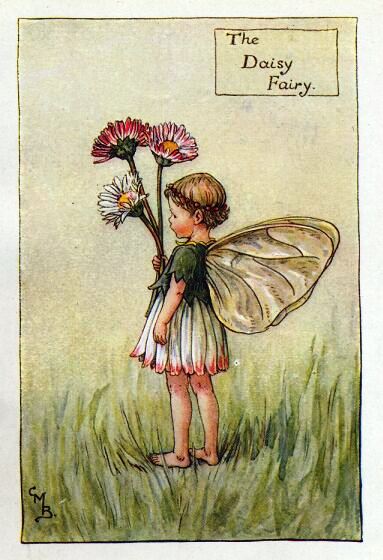
Think: Cicely Mary Barker illustrations.
(click for image credit)

2. There would be blue sky and flowers as tall as the faeries. 

3. The cannibalistic babies in question would have a stereotypically cherubic appearance, but with little fangs (now I’m thinking of Sunny Baudelaire, but the faeries I was expecting were in no way Series of Unfortunate Events-ish, seeing as my FQ palate was more cheerful), and from the little fangs would be driblets of blood, seeing as the babies had been consuming humans.

4. These adorable, cherubic cannibal-babies would glut themselves on people (who also looked like faeries, because it didn’t even occur to me that non-faerie creatures would appear in FQ) to the point that they would explode.

5. When these babies exploded, they would take off like fireworks and explode in the sky into a glittery mess.

6. Glittery because they were faeries, and where there are faeries, there’s dust.

Got it? Exploding cannibalistic babies.

Alright, so now that those expectations were cemented in my tutor-y brain, lo and behold, I was assigned excerpts of FQ for my upper-division survey course. I dove into the poem with happy anticipation of my expectations being consummated. Which led me to inquire of Hero, the next time I was in the tutoring lab, “Ummm… where are these exploding cannibalistic babies?”

Hero squinted at the bank of fluorescent lights in the ceiling, “Book 1…Canto 1?”

“Really?” I said. “I read Book 1, Canto 1.”

Hero then shanghaied (or maybe she just “took” it. I really wanted to use the word “shanghai”) my copy of Volume B of the emasculated Norton (as opposed to the doorstop), and briefly flipped the pages until, “Oh, yes, here it is… stanza 25…” and proceeded to read me a passage that had nothing to do with quaintness and glitter and my unconsummated expectations of the text, and everything to do with Error.

Error is a half-woman, half-serpent creature who looks too monstrous to put on a greeting card. When the knight Redcrosse goes to slay Error in her cave, she’s got a litter of Error-babies, which are not cherubic. After Redcrosse beheads Error, her surviving litter “flockéd all about her bleeding wound, / And suckéd up their dying mother’s blood”.

Hero then skipped to the next stanza, where, “Their bellies swolne he saw with fulnesse burst, / And bowels gushing forth: well worthy end / Of such as drunke her life, the which them nurst.” (A quick note on the spelling: being a product of his time, it’s how Edmund writes. Not my fault.) That was it for the babies, saving Redcrosse the moral dilemma of whether or not to kill them too, because (1) they were the spawn of evil, and (2) having one’s mother killed right in front of them will mean a world of mental health bills later in life.

The first draft of this post was peppered with outrage. It was disappointing and annoying for the cannibalistic babies to turn out to be nothing like I wanted them to be. However, I’m sure there will be far more outrageous surprises in my life, and I may not live to experience them if I get inconsolably riled up over the likes of literary characters and have a heart attack before I complete my bachelor’s degree in English literature. A lack of blue skies and glitter are not enough to disown the notion of reading FQ in its entirety. The length, however, might be. One must really, really want to read FQ to slog through all of it. I’ve seen people toting copies of FQ around campus, as well as a fat stack of them in my professor’s office, and they’re so epically enormous that they put the full-on Norton doorstop to shame.

22.10.13

God Sex and Religious Weirdoes: a lengthy endorsement of Margery Kempe

WARNING: spoilers, dirty words, suggestions of God having a sex drive, and excessive use of the impersonal “you”

Wednesday before last, when I entered the back room of the English lab, someone’s Norton Unwieldy Doorstop was sitting open on a desk, color-coded Post-Its pasted here and there on the page. Its owner sat in a swivel chair, facing away from the tome, but not far enough away that she wouldn’t notice if I tucked the Doorstop under my arm and fled from the premises.

She (we’ll call her “Hero”, because that requires less explanation than “Stripper”) was chatting with Anita on the subject of God sex. God sex and exploding, cannibalistic babies, to be precise, but the latter is from a separate work, and for the purposes of this post, I’ll be focusing on the God sex.

The story goes that, on the one day she hadn’t done the reading for Early English Lit class, Hero found herself sitting in on a conversation about God and Jesus having sex with some woman.

God first, then Jesus.

This woman, “banging” Jesus in her spiritual autobiography.

Hero flipped a few pages and handed the open Doorstop to Anita. “See? Do you see this?”

Anita began reading aloud, “I take you, Margery, for my wedded wife, for fairer, for fouler, for richer, for poorer…so long as you be buxom…” Then, “Sometimes she heard with her bodily ears such sounds and melodies that she might not hear well what a man said to her in that time unless he spoke the louder”, to which Anita commented, “It sounds like she’s having temporal lobe hallucinations.”

Being English majors all reading from the same canon, I naturally had access to the same passages of The Book of Margery Kempe in my own, albeit emasculated – seeing as its been broken down in three parts – copy of the Norton Doorstop. So, for fun and avoidance of my history paper, I read it.

Maybe I’ve been exposed to too many smutty romance novels at Girl Scout Camp*, because the God sex did not measure up to the tittering in the tutoring lab. Mind you, the Norton can only provide excerpts of Margery Kempe, so maybe they craftily sidestepped the more sultry scenes, but what was there fell short of my expectations. I wasn’t expecting long passages of solid, hardcore pornography, however I was expecting to be shocked with something explicitly erotic – as much, if not more, explicit than the details how of her husband, after he “turned childish again” in his old age, “voided his natural digestion in his linen clothes where he sat by the fire or the table, wherever it might be, he would spare no place”.

God telling Margery, “Therefore I needs[sic] be homely with you and lie in your bed with you” and that “you love me, daughter, as a good wife ought to love her husband” is different than the narrator showing us… la di da, you get it (thinking about it now, I’m glad I was spared).

The most detailed description of physical contact we get is when, in one of Margery’s visions, Jesus kissed the Virgin Mary “full sweetly”, but that was different, and not just because it wasn’t Margery. I’m not convinced that particular kiss is meant to be taken in a romantic/sexual manner, nor, therefore, an incestuous/Oedipal one. Sometimes in the Christian tradition, people kiss other people. It doesn’t necessarily happen in the nice, Calvinist venue I pop into once in a while (like most other contemporary church-goers, we shake hands when we pass the peace)… but, for instance, in the film Vision, nuns be kissin priests and other nuns all the time. It’s not sexual. They’re not getting fresh with each other. That’s just how it is.

Mind you, Vision was set several hundred years before The Book of Margery Kempe. I realize that, without the research that I slothfully resolved NOT to do, there is a potential anachronism there. Said realization domino-effected me into another, this time unflattering realization that I may have been recklessly grouping old-timey Christian mystics together into a fascinating, exotic group, potentially condescendingly otherizing them for my personal enjoyment, harkening to mind, in trajectory, crap like Orientalism. If you’re not following, it may or may not make more sense after you read...

WHY I LIKED MARGERY KEMPE

First, a sort-of digression, because there haven’t been enough already: remember when Jesus was at a dinner party and some woman busts in (depending on which gospel account you read, it’s one of the Marys) and pours all this expensive nard (perfume) on Jesus’ feet and starts crying and wiping it off with her hair?

If you’re anything like my mom, that passage probably annoys you, because, well, what self-respecting gentleman would want some crazy woman crashing a dinner party so she could be a big weirdo and put on such a display? On the other hand, every time I’ve heard it at my church**, the Calvinists have thought it’s a courageous act of love.

Margery experienced a farther reaching gamut of reactions,

For some said it was a wicked spirit vexed her; some said it was a sickness; some said she had drunk too much wine; some banned her; some wished she had been in the harbor; some would she had been in the sea in a bottomless boat; and so each man as he thought. Other ghostly men loved her and favored her more.

Because Margery would go into these INSANE crying fits every time she had a vision of and/or was reminded of the Passion (both happened a lot!). It probably doesn’t help that she sees Jesus in the face of every handsome man and young boy. Margery is so overcome with sorrow and compassion that she balls her eyes out to a point where it’s described as “roaring”.

Mind you, the woman in the gospels probably deliberately tracked down Jesus and poured nard all over his feet, while Margery “knew never time nor hour when they [the visions and corresponding crying fits] would come” and couldn’t handle herself. Zero say in the matter. BUT THE POINT IS, Margery cries with sorrow and compassion and ultimately LOVE for Jesus --> Margery is a big weirdo for Jesus, just like Nard Woman is.

And, yeah, if I were walking around with Margery in public for a prolonged period of time, maybe my wretched colors would come out bleeding out of me and I would find her utterly irritating and humiliating, too, however, I’m not walking around with her, I’m reading about her, and from where I’m sitting – safely, here, behind my Norton Doorstop, hella years after the fact – I think it’s beautiful. Hyperbolic and beautiful and weird and strangely appropriate given the “ghostly”, antiquated state of the text.

Frankly, I think it’s touching how much she loves Jesus, and given the anticlimax of the on-the-whole NOT sexual scenes, I don’t mean LOVE in an explicitly physical way. When Jesus is sitting next to Margery while God is asking Margery to marry her (yes, that happened – and, yes, that was weird), and she didn’t know what to say, partially because she was in love with the second Godhead of the Trinity, not the first*** - that was, oddly, fucking adorable.

I also liked how Margery was seeing angels everywhere like glorious dust motes. That was pretty cool. To which Anita might point out the possibility for temporal lobe hallucinations. Which makes it….no less cool.
So, would I recommend Margery Kempe? Yes. If you’re not a hater who’s gonna be like, damn religious people and their rap music. Because when people get weird and religious, it’s kind of easy to be a hater. If you’re like me, and not my mom, you’ll find religious weirdoes much more admirable and loveable in the antiquated sense than in, say, in Flannery O’Connor, where peeps be flat out insane. If you’re like my mom, you’ll hate both, and you should read something else.

I think religious kooks of the universe have their place. They can be wonderful, in their way. Yeah, once in a while there’s a dark-side of it; a money-embezzling, Jew-bashing, gay-hating, heathen-killing part that rears its ugly head from time and time again, but if that makes its way into Margery Kempe, I was certainly blind to it. And if I did see that in her, I wouldn’t be recommending her to others. Religious weirdoes – especially of antiquity – are adorable and worth their weight in nard.

Good on you, Margery Kempe.


* Men penetrating women with wine bottles while in the back of a horse-and-buggy, whoa!

** Mom and I don’t go to the same church.

*** Perhaps could be construed as a wee Marcion-esque depending on how much you’ve been drinking that day (what?), in retrospect, but The Book of Margery Kempe is unlike Marcion in that she neither hates the god of the Old Testament, nor does he write Him off as a tyrannical douche bag.